Read and export the audit log
Updated
The audit log is Artavolo's record of who did what. For every change it keeps who made it, when, how (on screen, through the API, by an AI agent), and what the value was before and after. Use it to answer "who changed this order?", or to show an auditor that your data is under control.
Read it in a base
A base's owners can read everything that happened in that base.
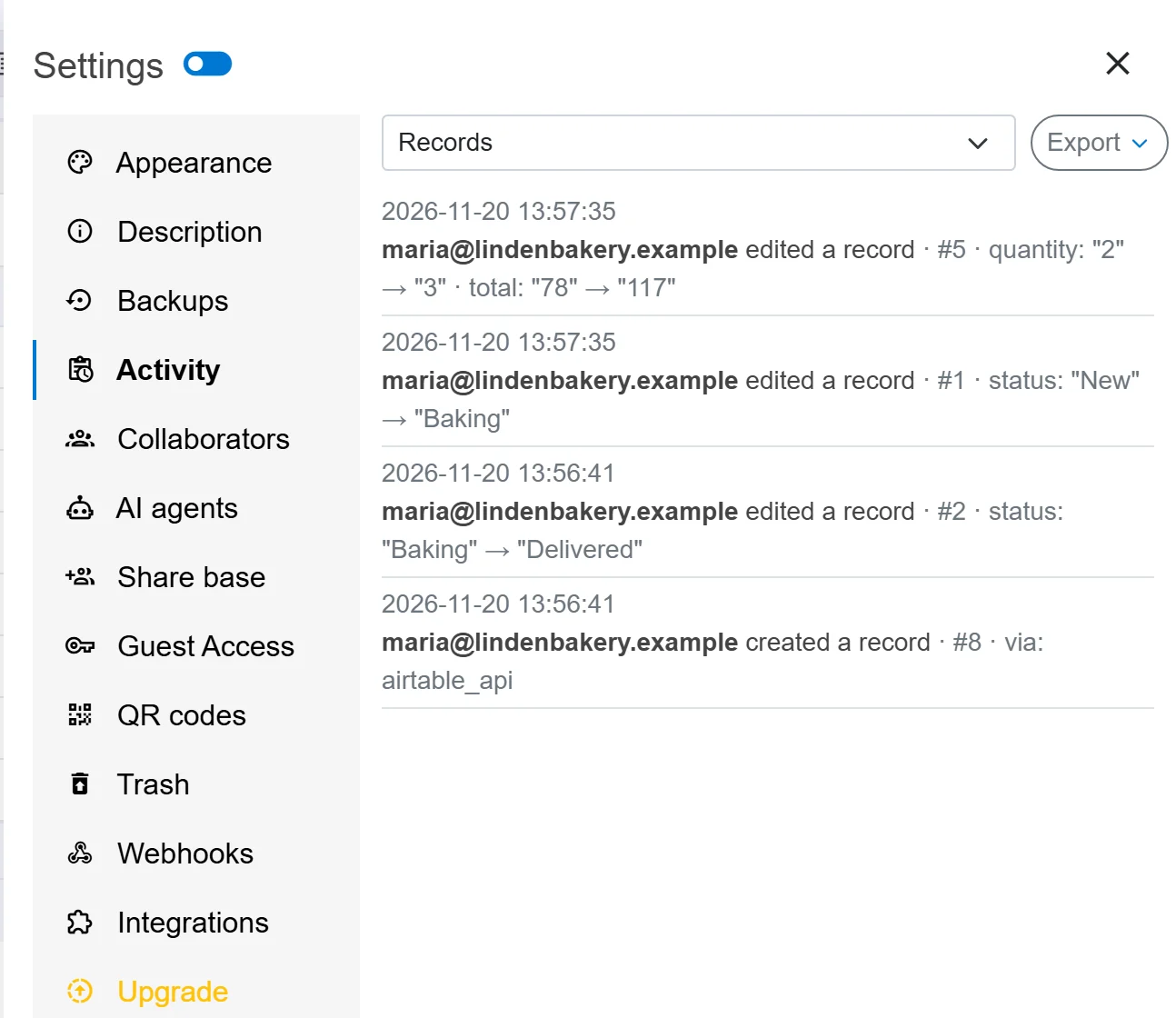
- Open the base and click Settings at the top right.

- In the list on the left of the Settings panel, click Activity.
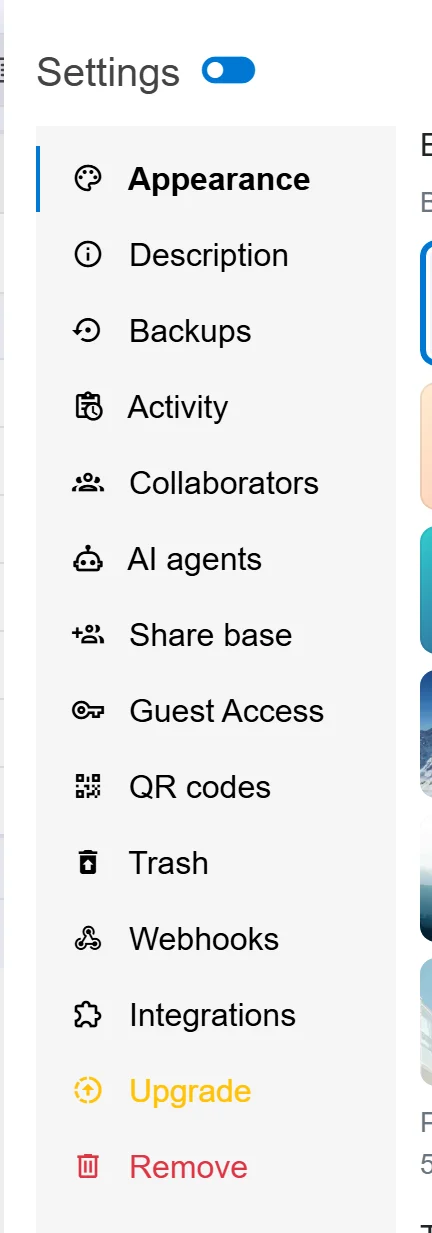
- To see one kind of event, choose it in the list at the top: Records, Cell edits, Permissions, Invitations, Backups, Structure & notes or Sign-ins. All events shows everything.
- Scroll down and click Load more to go further back.
- To keep a copy, click Export and choose CSV (opens in Excel) or JSON.
Read it for the whole installation
On your own server, an administrator can read and export the log of every workspace.
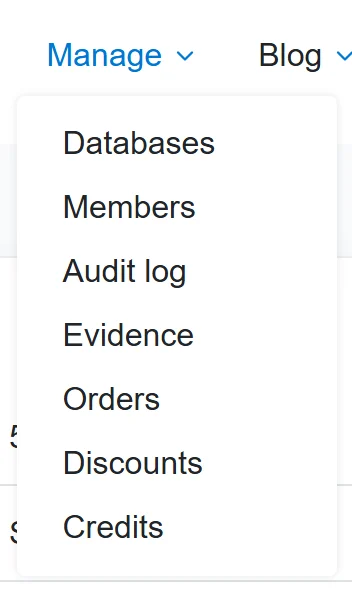
- Click the round button at the top right and choose Control panel.
- In the Control panel's top menu, open Manage and choose Audit log.
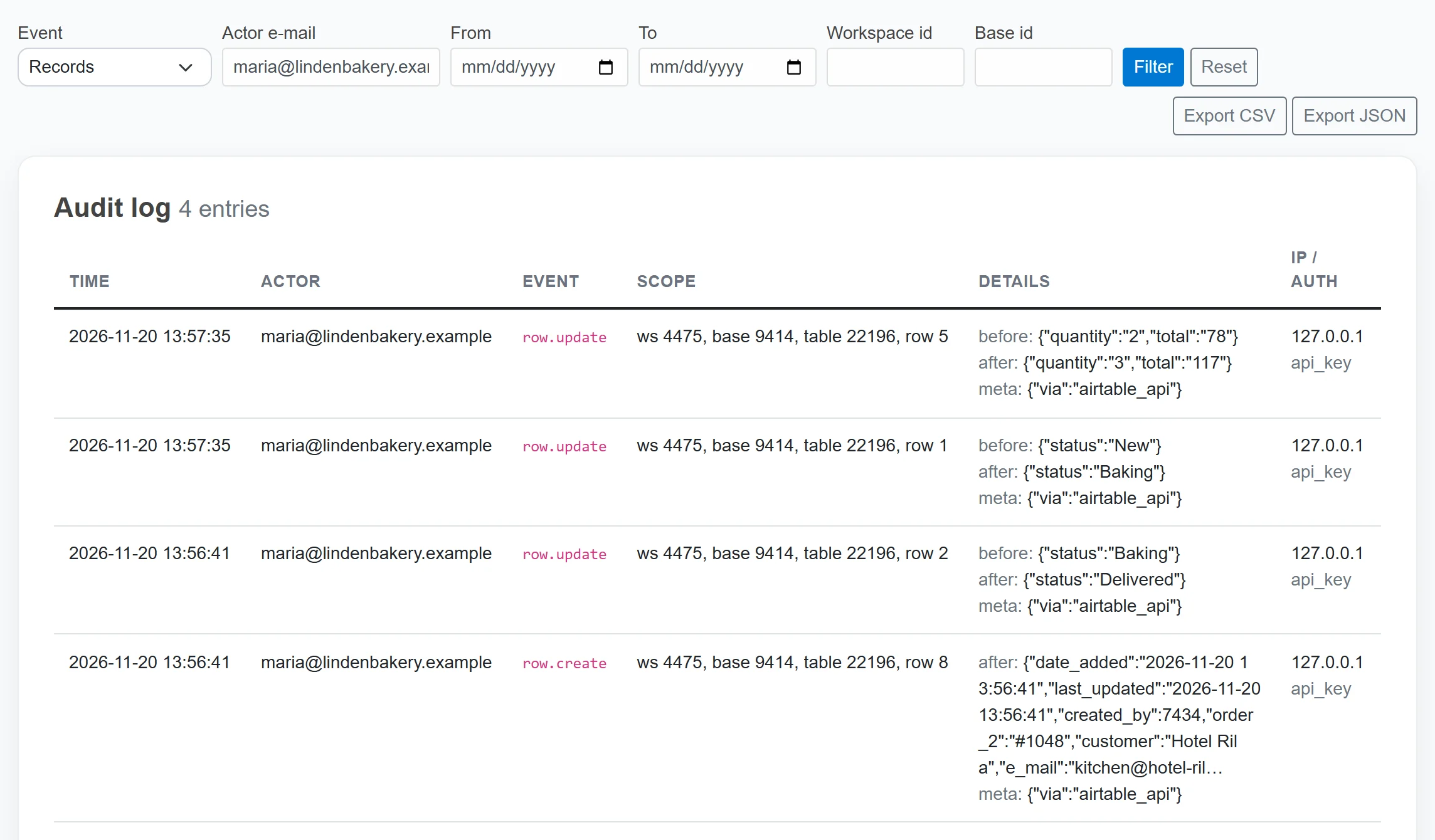
- Narrow it down with Event, Actor e-mail (the person), From and To (dates), Workspace id and Base id, and click Filter. Reset clears them.
- Click Export CSV or Export JSON to download what is shown.
What is recorded
- Sign-ins, failed sign-ins and new accounts, with the way the person signed in.
- Records added, changed and deleted, and single cell edits, with the values before and after.
- Tables, fields, views and bases created, changed and removed, and imports.
- Permissions, invitations, API tokens, backups, settings and members.
- Changes made through the API, AI chat, AI agents and embedded views, each credited to the person, agent or app that made them.
Each entry has the time, the person and their e-mail address, the internet address (IP) and sign-in method, and the workspace, base, table and record it is about.
Decide how long to keep it
On your own server, in the Control panel, open Settings, General:
- Keep audit log entries for (days): 0 keeps everything. Older entries are removed once a day by the cron job, and that removal is recorded too.
- Values stored with audit entries: Full before/after values, Changed fields only, or No values (who, what, when only), if your rules limit what may be kept.
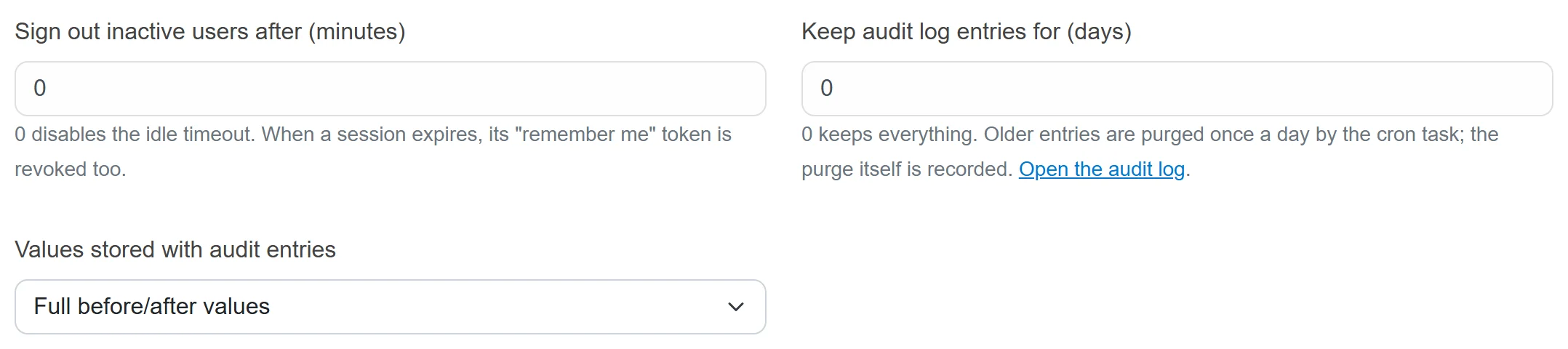
Each setting is saved as soon as you change it.
Good to know
- Nobody can edit or delete an entry from inside Artavolo. Exporting the log is recorded too.
- A base's owners see every event in their base. Other members see only the base's general activity messages.
- On your own server, exporting needs a licence key that includes audit log export (Standard and up). See Apply a licence key.
- A record's last 200 changes can also be read through the API. That is what a record's history in a base is built from.
- Changes made by an AI agent can be undone from the values the log keeps. See AI agents.